Double Decker
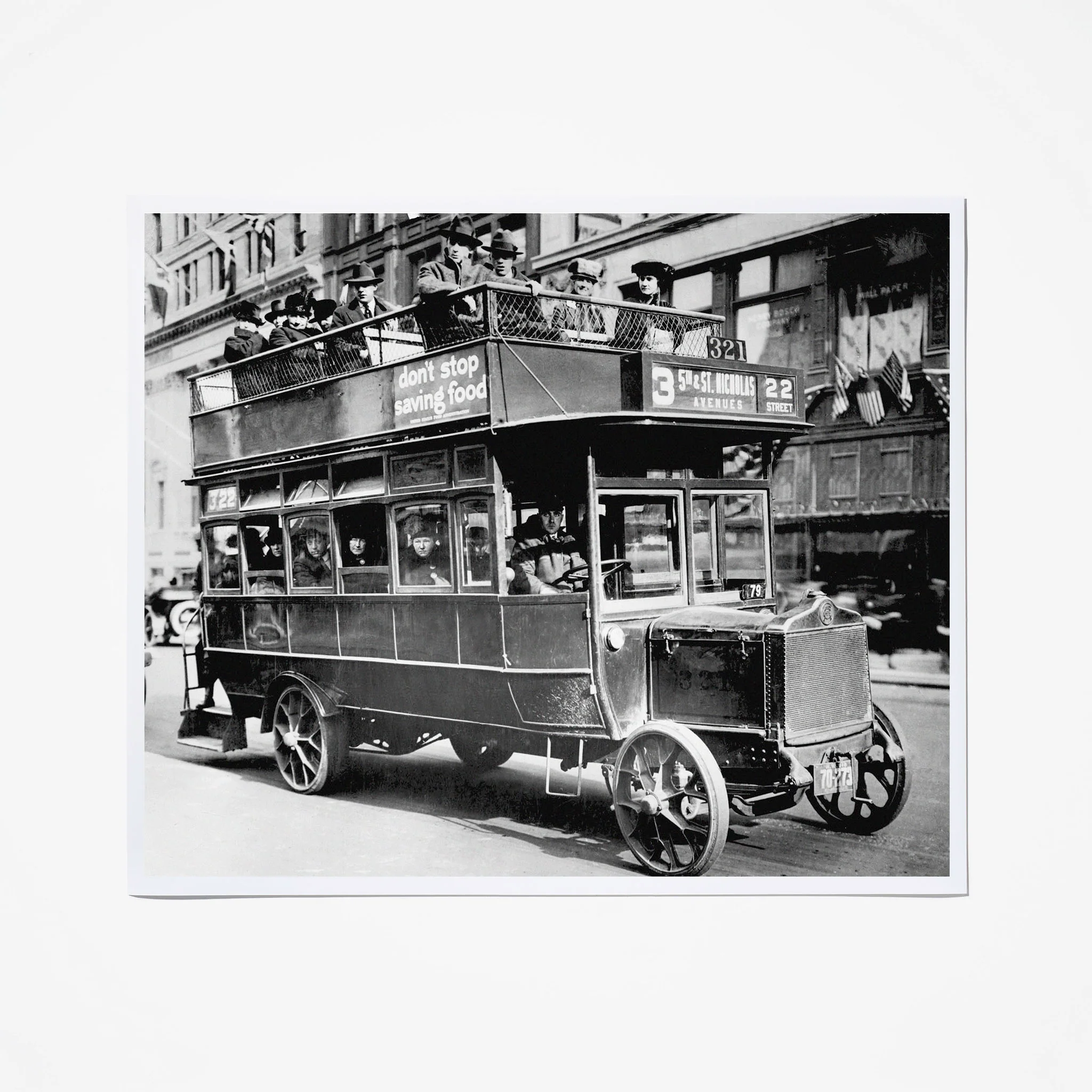
For two generations, double-decker buses - manned by a driver and conductor - lent a certain quaint flavor to New York's Fifth Avenue. Painted a handsome green and buff color, with a narrow winding stairway on its rear platform, the gasoline-driven buses were a favorite of New Yorkers from 1907 through 1946.
"The conductors have done more than simply collect dime fares in the "clock" (bus argot for coin-collecting machine)," The Times wrote. "As one conductor put it: I've held babies for passengers, taken cinders out of eyes, lit cigarettes on the upper deck and patched up lovers' quarrels." Fifth Avenue's two-deck buses, however, were slow to load with their narrow aisles and slow to accelerate because of their weight, plus they had to be carefully routed to avoid vertical obstructions.
The two-tiered buses were replaced by diesel-power, single-deck buses dubbed "Queen Marys." On December 29, 1946, the end of an era came. The Times reported, "A Fifth Avenue double-decker bus halted for a traffic light yesterday, and when the light turned green the vehicle swung west into Fifty-seventh Street and stopped, ending one more chapter of New York City's transportation history."
For two generations, double-decker buses - manned by a driver and conductor - lent a certain quaint flavor to New York's Fifth Avenue. Painted a handsome green and buff color, with a narrow winding stairway on its rear platform, the gasoline-driven buses were a favorite of New Yorkers from 1907 through 1946.
"The conductors have done more than simply collect dime fares in the "clock" (bus argot for coin-collecting machine)," The Times wrote. "As one conductor put it: I've held babies for passengers, taken cinders out of eyes, lit cigarettes on the upper deck and patched up lovers' quarrels." Fifth Avenue's two-deck buses, however, were slow to load with their narrow aisles and slow to accelerate because of their weight, plus they had to be carefully routed to avoid vertical obstructions.
The two-tiered buses were replaced by diesel-power, single-deck buses dubbed "Queen Marys." On December 29, 1946, the end of an era came. The Times reported, "A Fifth Avenue double-decker bus halted for a traffic light yesterday, and when the light turned green the vehicle swung west into Fifty-seventh Street and stopped, ending one more chapter of New York City's transportation history."
Original: $50.00
-65%$50.00
$17.50Description
For two generations, double-decker buses - manned by a driver and conductor - lent a certain quaint flavor to New York's Fifth Avenue. Painted a handsome green and buff color, with a narrow winding stairway on its rear platform, the gasoline-driven buses were a favorite of New Yorkers from 1907 through 1946.
"The conductors have done more than simply collect dime fares in the "clock" (bus argot for coin-collecting machine)," The Times wrote. "As one conductor put it: I've held babies for passengers, taken cinders out of eyes, lit cigarettes on the upper deck and patched up lovers' quarrels." Fifth Avenue's two-deck buses, however, were slow to load with their narrow aisles and slow to accelerate because of their weight, plus they had to be carefully routed to avoid vertical obstructions.
The two-tiered buses were replaced by diesel-power, single-deck buses dubbed "Queen Marys." On December 29, 1946, the end of an era came. The Times reported, "A Fifth Avenue double-decker bus halted for a traffic light yesterday, and when the light turned green the vehicle swung west into Fifty-seventh Street and stopped, ending one more chapter of New York City's transportation history."